
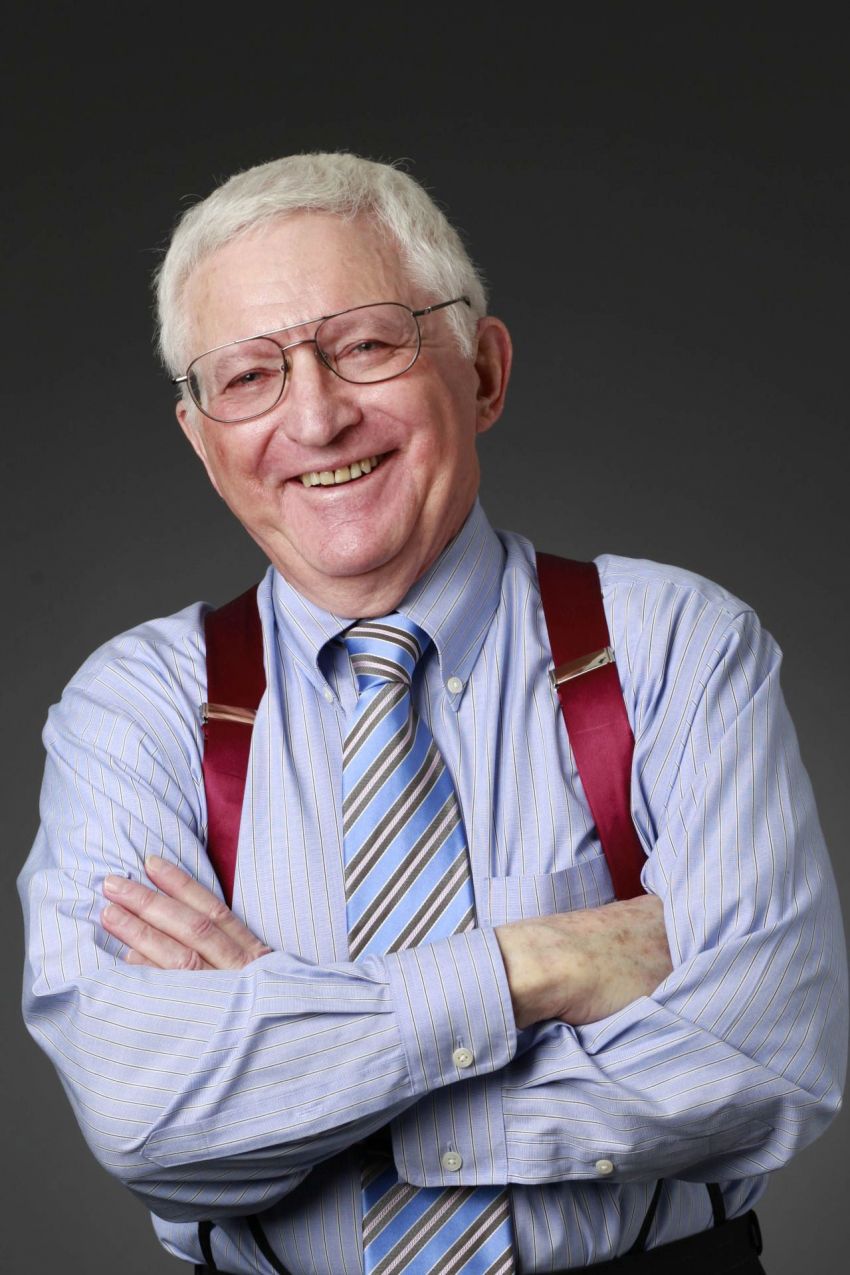
Professor of Law
Education
B.S., 1961, Carnegie–Mellon University
J.D., 1964, University of Florida
LL.M., 1965, Yale University
Bio
Lester Brickman is a professor of law and former acting dean at the Benjamin N. Cardozo School of Law, where he teaches contracts and legal ethics. He has written extensively on legal ethics, and his writings have been widely cited in treatises, casebooks, scholarly journals and judicial opinions (including the United States Supreme Court, United States Circuit Courts of Appeals, state supreme courts and federal and state appellate and trial courts).
Among his areas of specialty are contingency fees and their effect on the tort system, mass tort litigation, asbestos litigation, regulation of attorney fees in the tobacco litigations, fee arbitration, and class actions. His articles and amicus brief on nonrefundable retainers resulted in the banning of their use by the New York Court of Appeals—a holding which a number of state supreme courts have adopted. He is a leading authority on contingency fees and his writings on that subject are the basis for a proposal (described in a front page story in the New York Times and coauthored by Professor Brickman) to realign the contingency fee system with its policy roots and ethical mandates. Professor Brickman published a book, distilling 20 years of his research, on the underappreciated costs of contingency-fee financing of tort litigation titled Lawyer Barons: What Their Contingency Fees Really Cost America (Cambridge University Press, 2011). He has written extensively on asbestos litigation and his treatise-length articles and testimony before the Senate Judiciary Committee and a subcommittee of the House Judiciary Committee have been influential in directing attention to critical asbestos litigation abuses. He has been acknowledged by four federal courts as an expert on the history of asbestos litigation, asbestos bankruptcy trusts and the effect of tort reform on future asbestos claim generation. In early 2005, President George W. Bush introduced Professor Brickman to an audience in McComb County, Michigan, as an expert on asbestos litigation issues and asked Professor Brickman to explain the need for a legislative solution for asbestos litigation abuses.
Professor Brickman has been widely quoted in the press on lawyer fee issues as well as on tort reform issues. He has testified before Congress on the delivery of legal services, asbestos litigation, contingency fee abuses generally and in tobacco litigation and on the constitutionality of congressional regulation of fees in tobacco litigation. He has been a consultant to the Administrative Conference of the United States (to devise a plan for an administrative alternative to asbestos litigation and to organize a colloquium to consider that plan); the U.S. Office of Education (on clinical legal education); the Legal Educational Institute of the U.S. Civil Service Commission (as a lecturer on profession responsibility to government attorneys); the National Science Foundation (to provide a research agenda for improving the delivery of legal services to middle class consumers); the Council on Legal Education for Professional Responsibility (to make clinical legal education a regular part of law school education and to devise methods of assessing clinical programs); the Ford Foundation (to investigate the use of legal paraprofessionals and to recommend a course of action); the American Bar Association (on specialization in the legal profession); the U.S. Law Enforcement Assistance Administration (to add law school clinical programs in prosecutors' offices); and the U.S. Office of Legal Services (to evaluate government-funded Legal Services program).
In addition, he has consulted for law firms on matters of legal ethics, fee issues, valuation of tort claims, fiduciary obligation, the lawyer's standard of care, and asbestos bankruptcies. He has served on the professional responsibility committees of the New York State and City bar associations and on the Professional and Judicial Ethics committee of the Association of the Bar of the City of New York. Professor Brickman is a graduate of Carnegie-Mellon University, the University of Florida Law School and has a Masters in Law degree from the Yale Law School.
Publications
Lawyer Barons: What Their Contingency Fees Really Cost America, Cambridge Univ. Press, Feb. 2011 (584 pages).
Unmasking the Powerful Force that has Mis-Shaped the American Civil Justice System, 3 Global Competition Litigation Review, issue 4 at 169 (2010).
Anatomy of an Aggregate Settlement: The Triumph of Temptation Over Ethics, 79 George Wash. L. Rev. 700-716 (2011), accessible at: http://ssrn.com/abstract=1649509.
The Use of Litigation Screenings in Mass Torts: A Formula For Fraud?, 61 SMU L. Rev. 1221 (2008).
Disparities Between Asbestosis and Silicosis Claims Generated By Litigation Screenings and Clinical Studies, 29 Cardozo L. Rev. 513 (2007), accessible at: http://ssrn.com/abstract=970993.
A Response to Stephanie Mencimer (April 2007). A response to Stephanie Mencimers' remarks about Professor Brickman in Blocking the Courthouse Door.
A Response to Bryan O. Blevins, Jr., Provost Umphrey, LLP (Dec. 2006). A response to the presentation of Bryan O. Blevins, Jr. at the AEI-Brookings First Annual Judicial Symposium on Civil Justice Issues, December 7, 2006.
Comments on NIOSH's Proposed B Reader Code of Ethics, submitted on December 22, 2005.
Ethical Issues In Asbestos Litigation, 33 Hofstra L. Rev. 833-912 (2005).
Asbestos Kills,National Review, Jan. 31, 2005, at 39 (with Harvey D. Shapiro).
Making Lawyers Compete,Regulation 30 (Summer 2004).
Lawyers' Ethics and Fiduciary Obligation in the Brave New World of Aggregative Litigation, 26 William & Mary Environmental Law & Policy Review 243-322 (2001).
Letter (Testimony) to ABA Ethics 2000 Commission Hearing, New Orleans, La., March 23, 2000.
Regulation By Litigation: The New Wave Of Government Sponsored Litigation, Remarks at Manhattan Inst. and U.S. Chamber of Commerce conference, (June 22, 1999).
“Should Plaintiff Lawyers in the Tobacco Settlement Receive Billions of Dollars? No: Congress Should Set the Fees for this Unique Case," A.B.A.J. Sept. 1997 at 75.
ABA Regulation of Contingency Fees: Money Talks, Ethics Walks, 65 Fordham L. Rev. 247-335 (1996).
Limiting Lawyers' Unearned Windfall Fees, N.Y.L.J., August 4, 1994 at 5.
Living with the Ban on Nonrefundable Retainers: Cooperman's Scope, Meaning and Consequences, 66 N.Y.S. Bar J. 50-54 (1994), co-authored with L. Cunningham.
Rethinking Contingency Fees: A Proposal To Align The Contingency Fee System with its Policy Roots and Ethical Mandates, (1994), monograph co-authored with Michael Horowitz and Jeffery O’Connell.
Has the Office of Thrift Supervision Changed the Relevant Ethics Rules by its Actions in the Kaye, Scholer Matter?, in The Attorney-Client Relationship After Kaye, Scholer, Practicing Law Institute 79-91 (1992).
The Asbestos Litigation Crisis: Is There a Need for An Administrative Alternative?, 13 Cardozo L. Rev. 1819-1889 (1992).
Setting the Fee when the Client Discharges a Contingent Fee Attorney, 41 Emory L.J. 367-401 (1992).
A Massachusetts Debacle: Gagnon v. Shoblom, 12 Cardozo L. Rev. 1417 (1991).
Attorney-Client Fee Arbitration: A Dissenting View, 1990 Utah L. Rev. 277-307 (1990).
Dedication to Karl Krastin, 14 Nova L. Rev. 3-6 (1989).
The Education and Licensing of Lawyers: Current Proposals to Improve the Competence of Lawyers, in The Education And Licensing of Lawyers 11-42 (CLEPR, 1976).
Special Editor: Learning and The Law, no. 3, no. 2 (summer 1976) dealing with the education and training of lawyers for competency before admission to practice.
The Role of Research in the Delivery of Legal Services: Working Papers and Conference Proceedings (1976, co-edited with Richard Lempert); reprinted as 11 Law & Soc. Rev. no. 2 (Special Issue 1976) of which I was Guest Co-Editor.
"Legal Specialization: An Overview of Goals and Ethical Considerations," in Legal Specialization 5-19, Special Committee on Specialization Monograph No. 2 (ABA , 1976); 45 S. Car. L. Rev. 1056 (1994).
"Advertising: A Business Technique for Lawyers?" 24 Virginia Bar News 15-21 (1975), paper delivered to the 1975 Annual Meeting of the Virginia State Bar Association.
"Evaluation: Needs and Techniques" and "An Outline for Evaluation of a Full Time Legal Aid Law Office," in Conference on Legal Aid, Report and Proceedings 65-76 (Canadian Council on Social Development, March 1975).
"Should Lawyers Be Permitted To Advertise? Yes, but...," paper delivered to the National Conference of Bar Presidents and reprinted in part in 1 The Bar Leader 18-19 (May-June, 1975); cited in 51 Calif. S. B.J. 330 (1976) and 22 The Alumnus of the University of Toledo 12-14 (June-July, 1975).
CLEPR and Clinical Education: A Review and Analysis, in Clinical Education for the Law Student: Legal Education in a Service Setting, pp. 56-93 (1973).
Legal Delivery Systems-A Bibliography, 4 Un. of Toledo L. Rev. 465-552 (1973).
"Legal Services in the 70's: The Shape of the Future," 4 Un. of Toledo L. Rev. 361 (1973).
Book Review (Training for the Public Professions of the Law: 1971; A Report to the Association of American Law Schools), 24 U. of Ill. L. Forum 843-54 (1972).
Legal Paraprofessionalism and Its Implications: A Bibliography, 24 Vand. L.R. 1213-1239 (1971).
I have authored several issues of the Newsletter of the Council on Legal Education for Professional Responsibility including: no. 2 (Nov. 1969), no. 6 (Jan. 1970), no. 9 (April, 1970) and no. 11 (May, 1970) of vol. 1; no. 3 (Nov. 1970) and no. 4 (Jan. 1971) of vol. 3; no. 1 (July, 1971) of vol. 4; no. 8 (Nov. 1974) of vol. 7; and no. 3 (Feb. 1978) of vol. 10. In addition, I authored the following newsletters of the Council that are of "short article" length:
Clinical Education--Polemics and Pragmatics, v. 3, no. 5 (Feb. 1971).
Report on Paraprofessional Workshops, v. 4, no. 10 (March, 1972);
CLEPR Conference on Clinical Teaching, v. 5, no. 2 (July, 1972);
Clinical Work in the First and Second Year of Law School , v. 6, no. 7 (Dec. 1973);
Clinical Legal Education and Legal Aid--The Canadian Experience (coauthored), no. 6, no. 13 (May, 1974);
Clinical Education: The Student Perspective (co-authored), v. 7, no.1 (July, 1974);
Group Legal Services and Clinical Legal Education, v. 7, no. 6 (Oct.1974);
The Education and Licensing of Lawyers, v. 9, no. 2 (Feb. 1974), reprinted in 46 The Bar Examiner 63 (1977);
Growing Pains in Law School Tax Clinics, v. 10, no. 4 (March 1978), cited in 35 Vanderbilt Law Review 352 (1982);
Is Law School a Full Time Enterprise ?, v. 10, no. 6 (May 1978);
Highlights of Conference on Title XI, no. 10, no. 7 (May 1978).
In 1966-67, as Deputy Director of the AALS-funded Student Wave Survey, I published several newsletters which listed and commented on the interim results of the Survey. In 1967-69, I published a quarterly journal titled Law & Poverty which was a commentary on local socio-legal issues.
Contact Information
Cardozo School of Law
55 Fifth Avenue
Room 521
New York, NY 10003
